Jordan Flores · 1 September 2026
Steinora's Quarries as Living Classrooms: How Regional Education Programs Bridge Geology, Folklore, and Regulatory Shifts
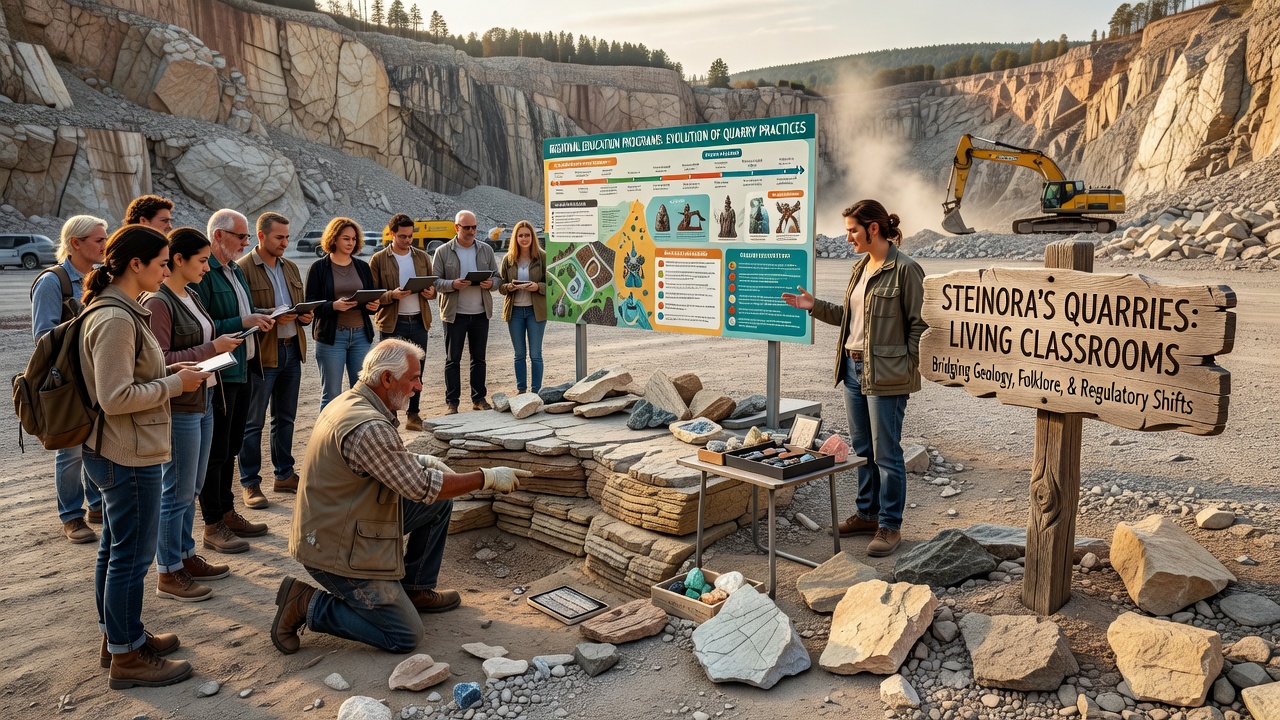
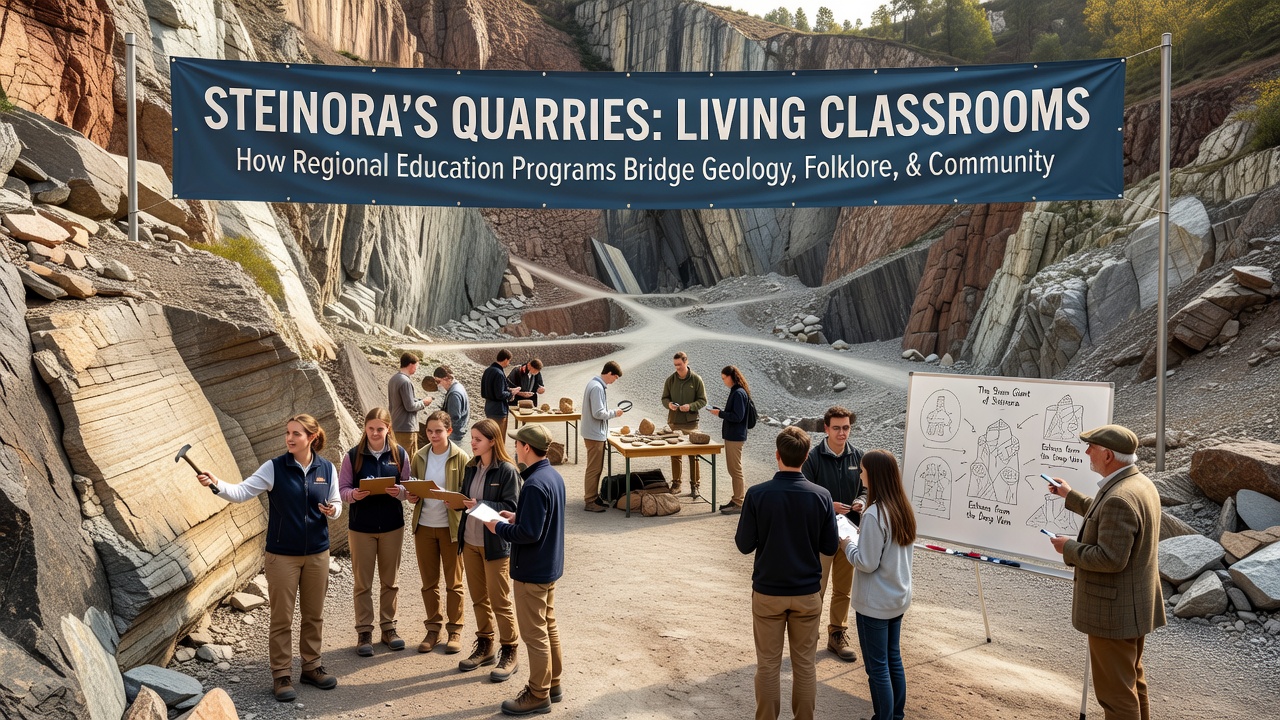
Regional education initiatives in the Steinora area have turned former industrial quarry sites into active learning environments where geology lessons combine with local folklore studies, and these programs operate amid evolving regulations that govern land use and public access. Educators coordinate field visits that allow participants to examine exposed rock strata while hearing traditional tales tied to the same locations, creating integrated experiences that span multiple disciplines at once.
Geology instruction at these sites focuses on sedimentary sequences and mineral deposits that formed over millions of years, with instructors using on-site examples to illustrate processes such as erosion and tectonic activity. Folklore components draw from regional stories about quarry spirits and ancient mining communities, which researchers have documented in oral histories collected over the past decade. Programs schedule sessions so that students move between physical rock analysis and narrative discussions without leaving the quarry grounds, thereby connecting scientific observation directly to cultural context.
Program Structure and Participant Reach
Coordinated by local school districts and heritage organizations, the initiatives run seasonal modules that begin in spring and extend through autumn, with September 2026 marking the introduction of updated access protocols that require additional safety certifications for group leaders. Data from the previous academic year shows over 2,400 students from twelve municipalities took part in at least one quarry-based session, according to figures compiled by the regional education authority. Sessions typically last three to five hours and incorporate both guided walks along quarry walls and interactive storytelling circles set against the excavated landscapes.
Instructors adapt content for different age groups, so primary students focus on basic rock identification and simple legends while secondary groups tackle stratigraphic mapping alongside analysis of how folklore reflects historical labor conditions. Materials developed for these programs include laminated field guides that pair geological diagrams with excerpts from 19th-century local accounts, ensuring factual accuracy across both domains.
Regulatory Framework and Upcoming Adjustments
Quarry operators must comply with environmental permits that limit visitor numbers and mandate restoration timelines, yet recent policy updates have carved out provisions for educational use provided operators meet enhanced monitoring standards. The European Environment Agency has published guidelines on balancing extraction activities with public education access, and German federal rules scheduled for full implementation in September 2026 will require quarries hosting school groups to maintain real-time environmental sensors that track dust and noise levels during visits. These measures build on earlier legislation from 2023 that first recognized educational partnerships as valid secondary uses of active extraction sites.
Operators report that the dual-purpose model has not slowed production quotas, because educational groups visit during designated low-activity windows and follow strict route protocols that avoid operational zones. Compliance audits conducted in 2025 confirmed that all participating sites maintained required safety buffers while accommodating the additional foot traffic from classes.
Integration of Geology and Folklore Content
Lesson plans developed by university-affiliated curriculum teams link specific geological formations to folklore motifs, such as associating certain fault lines with stories of subterranean beings that supposedly guarded mineral veins. Field leaders present these connections through evidence-based narratives rather than speculation, drawing on peer-reviewed papers that examine how cultural memory preserves observations of geological events like landslides or flooding. One module examines a prominent cliff face where students measure dip angles and then compare their data to a 17th-century ballad that describes the same cliff collapsing after a legendary quarrel among quarry workers.
Researchers from institutions across northern Europe have contributed case studies that help instructors keep content current, while a partnership with the Australian Department of Climate Change, Energy, the Environment and Water supplies comparative examples from similar quarry-education projects in arid regions. These cross-regional references allow participants to see how regulatory approaches and storytelling traditions differ yet share common threads in resource management.
Assessment and Long-Term Outcomes
Evaluation reports track knowledge gains through pre- and post-visit assessments that measure both geological terminology retention and recognition of local folklore variants. Results indicate consistent improvement across cohorts, with the largest gains appearing in students who attended multiple sessions over one school year. Follow-up surveys sent six months later show sustained interest in related careers, including environmental monitoring and cultural heritage preservation, though direct causation remains under study by independent academic teams.
Quarry companies that host the programs note improved community relations and occasional recruitment interest from former participants who later pursue technical training. The model continues to evolve as new regulatory language takes shape ahead of the September 2026 deadline, with working groups that include educators, operators, and local historians meeting quarterly to refine access procedures and content accuracy.
Conclusion
Steinora's quarry-based education programs demonstrate how industrial landscapes can support simultaneous instruction in earth sciences and cultural traditions under tightening regulatory conditions. Continued coordination among schools, operators, and oversight bodies will determine how these living classrooms function once the 2026 updates take full effect, yet current structures already deliver measurable educational value across the disciplines involved.