Felix Schwarz · 29 September 2026
Community Initiatives at Steinora Quarry Connect Skilled Labor Practices to Biodiversity Conservation and Climate Adaptation Efforts
Steinora Quarry has rolled out a series of community training sessions that combine established quarry extraction techniques with biodiversity monitoring protocols and real-time climate data interpretation. These programs run through regional education partnerships and target local workers, students, and environmental volunteers who seek practical knowledge that applies directly to site operations and surrounding ecosystems.
Program Structure and Participation
Sessions occur on a monthly schedule with the next full cycle set to begin in September 2026, drawing participants from nearby communities who learn to apply traditional stone-handling methods while tracking habitat indicators such as native plant coverage and soil stability. Coordinators from the quarry operator work alongside researchers from regional universities to deliver modules that last two to three days each, and attendance records show steady growth since the initiative started two years ago.
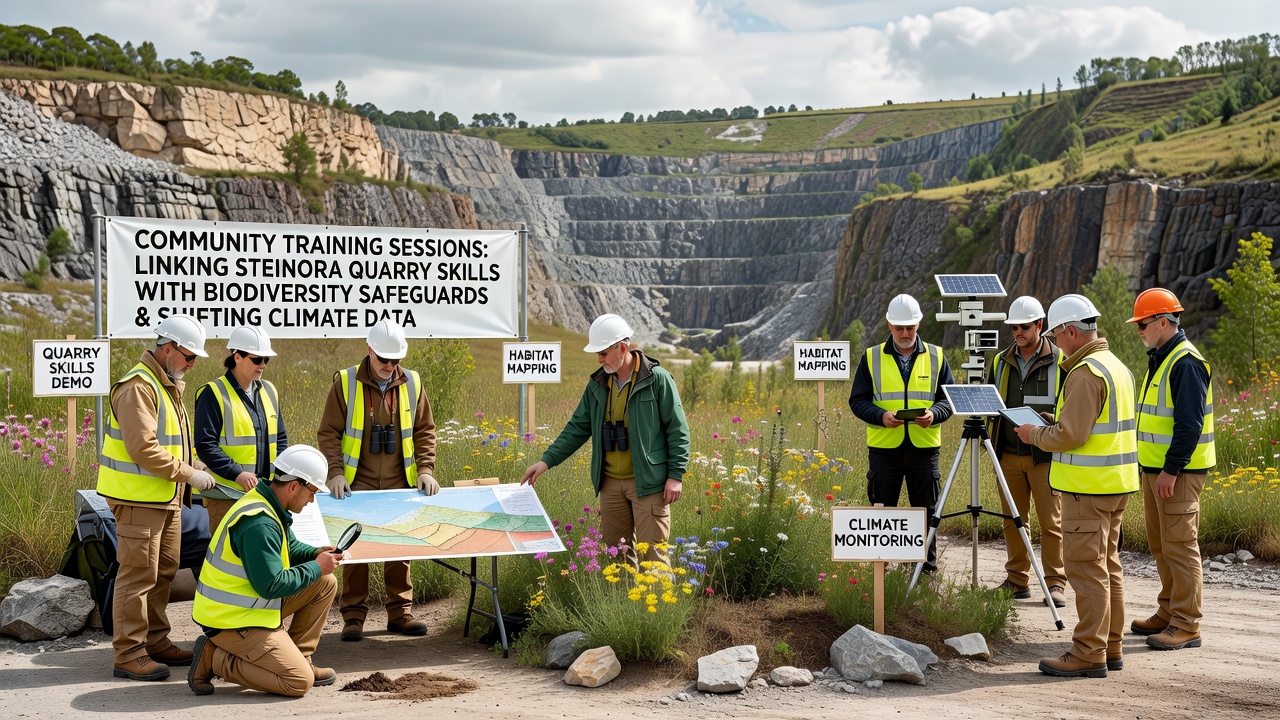
Trainers emphasize hands-on exercises that include mapping micro-habitats around active extraction zones, adjusting equipment routes to avoid sensitive areas, and recording temperature and precipitation shifts that affect water runoff patterns. Data collected during these activities feeds into a shared database that quarry managers and local conservation groups both access for planning purposes.
Linking Quarry Skills to Biodiversity Measures
Participants practice quarry skills such as controlled blasting and material transport while simultaneously learning to identify protected species and install temporary barriers that limit disturbance to nesting sites. One exercise requires teams to reroute haul roads based on field observations of amphibian movement corridors, and records from past sessions indicate that such adjustments have reduced incidental habitat fragmentation by measurable percentages.
According to reports published by the Australian Department of Climate Change, Energy, the Environment and Water, similar integrated training approaches at extraction sites have helped maintain species diversity levels even as production volumes increased. Steinora instructors adapt these findings to local geology and climate conditions, providing participants with site-specific checklists that cover both operational efficiency and ecological safeguards.
Image placement occurs here to illustrate ongoing fieldwork.
Incorporating Shifting Climate Data
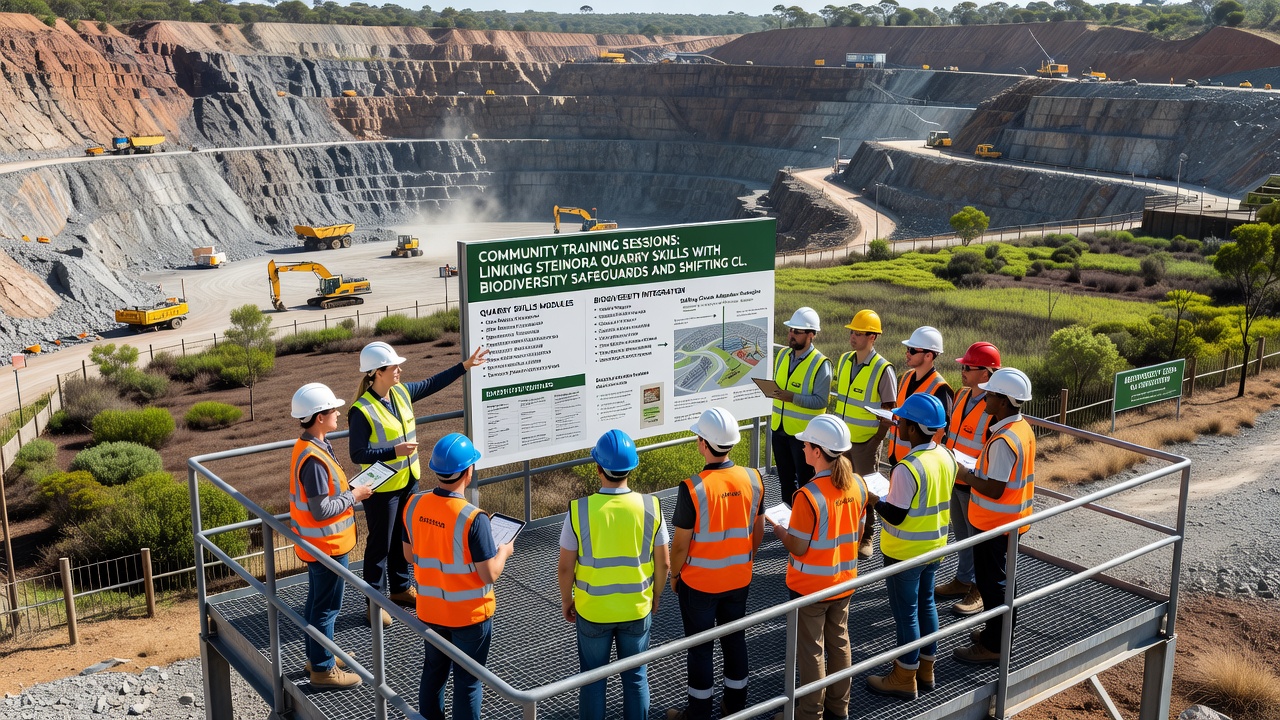
Climate data integration forms a core component of every session, with participants reviewing long-term records from on-site weather stations and satellite feeds to anticipate changes in rainfall intensity or seasonal temperature extremes. These insights guide decisions on when to schedule certain quarry activities to minimize erosion risks or to time restoration plantings for optimal survival rates.
Research coordinated through the European Environment Agency highlights how extraction operations that factor in updated climate projections can reduce long-term remediation costs, and Steinora trainers reference those findings during classroom segments before moving to field applications. Participants practice entering new climate observations into standardized forms that automatically flag deviations from baseline patterns established over the previous decade.
Community Outcomes and Data Sharing
Local residents who complete the training often return to their own properties or community projects with updated techniques for balancing land use and habitat protection. Quarry management reports that internal safety and environmental compliance metrics have improved since the sessions began, and external audits confirm that biodiversity indicators remain stable across monitored zones.
Information generated during the programs is shared through open-access portals that allow neighboring municipalities and academic teams to compare results with their own datasets. This collaborative model has led to joint studies on how quarry rehabilitation plans can incorporate climate-resilient plant species selected from regional seed banks.
Future Sessions and Expansion Plans
Upcoming September 2026 modules will introduce additional sensors for tracking micro-climate variations within quarry pits, adn organizers plan to expand enrollment to include secondary school groups interested in environmental technology careers. Funding for equipment upgrades comes from a combination of quarry operating budgets and grants awarded to participating research institutions.
Observers note that the approach at Steinora aligns with broader industry shifts toward training models that treat operational expertise and ecological responsibility as interconnected rather than separate concerns. Continued data collection through these sessions will supply evidence for evaluating whether similar programs produce consistent results at other extraction sites facing comparable climate pressures.
Conclusion
Steinora Quarry's community training sessions demonstrate a practical method for connecting established labor skills with biodiversity protection steps and climate data application. The structured format, regular scheduling, and emphasis on shared data collection provide measurable inputs for both site management and regional conservation planning. As the September 2026 cycle approaches, participation numbers and documented outcomes will offer further evidence of how these integrated approaches function across different operational phases.